Cardboard Chair
Final.
Designing and constructing a full scale chair from cardboard only. No fixings, glue or screws. The chair must hold the weight of an average human while balancing structural integrity with considered aesthetics.
Ideation Practice
Developing a quick ideation process through two stages: rough idea generation followed by refined development sketches with human scale and annotations.
Part 1 · Rough Ideas
 Rough Ideas 1
Warming Up
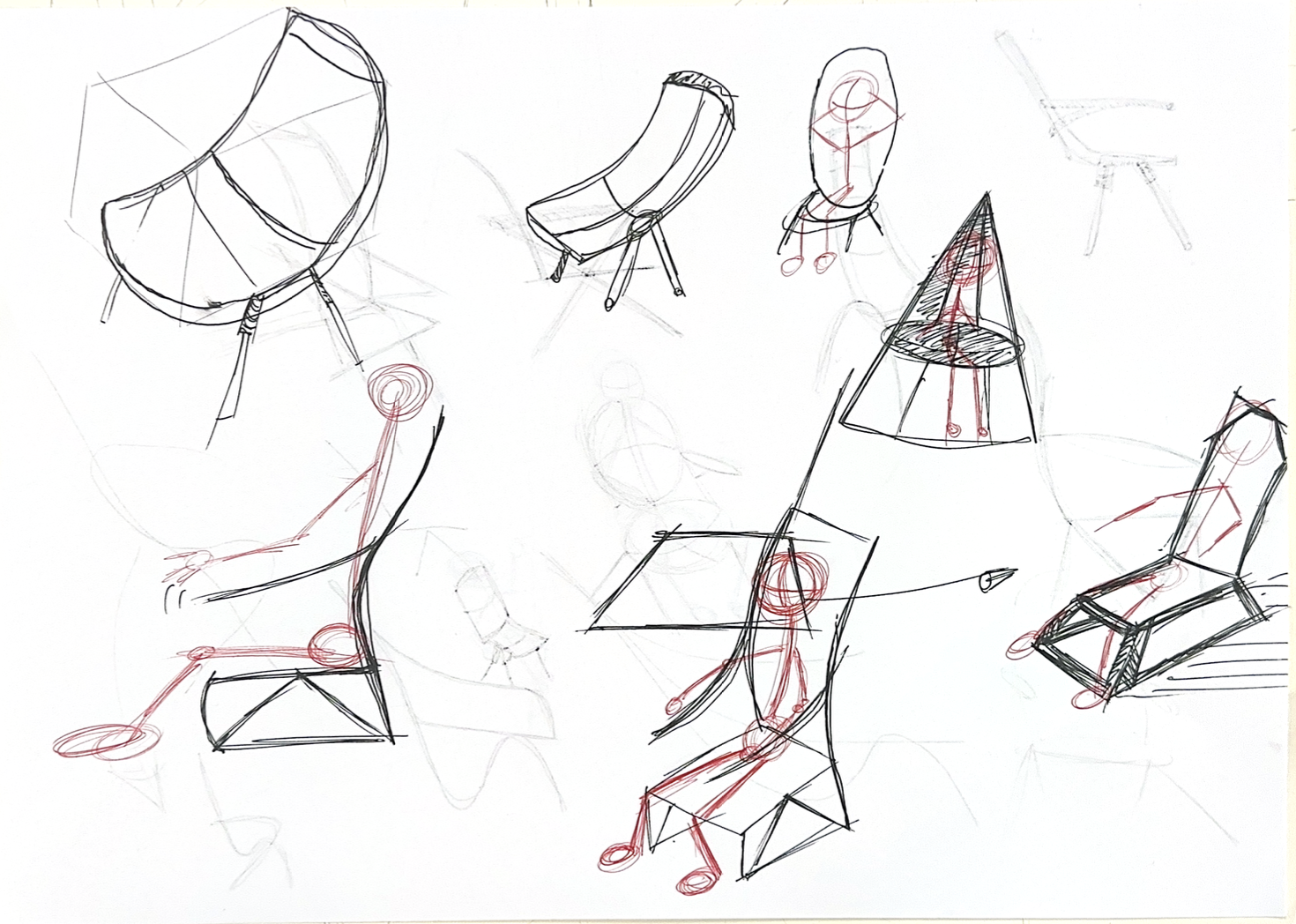
Firstly, I conducted a whole page of warmups, drawing parallel lines, ellipses, random shapes and 3D volumes. It was important to warm up first, as otherwise I feel too much like a perfectionist and need to get the rough sketching style loosened up in both my head and hands.
Finding a Process
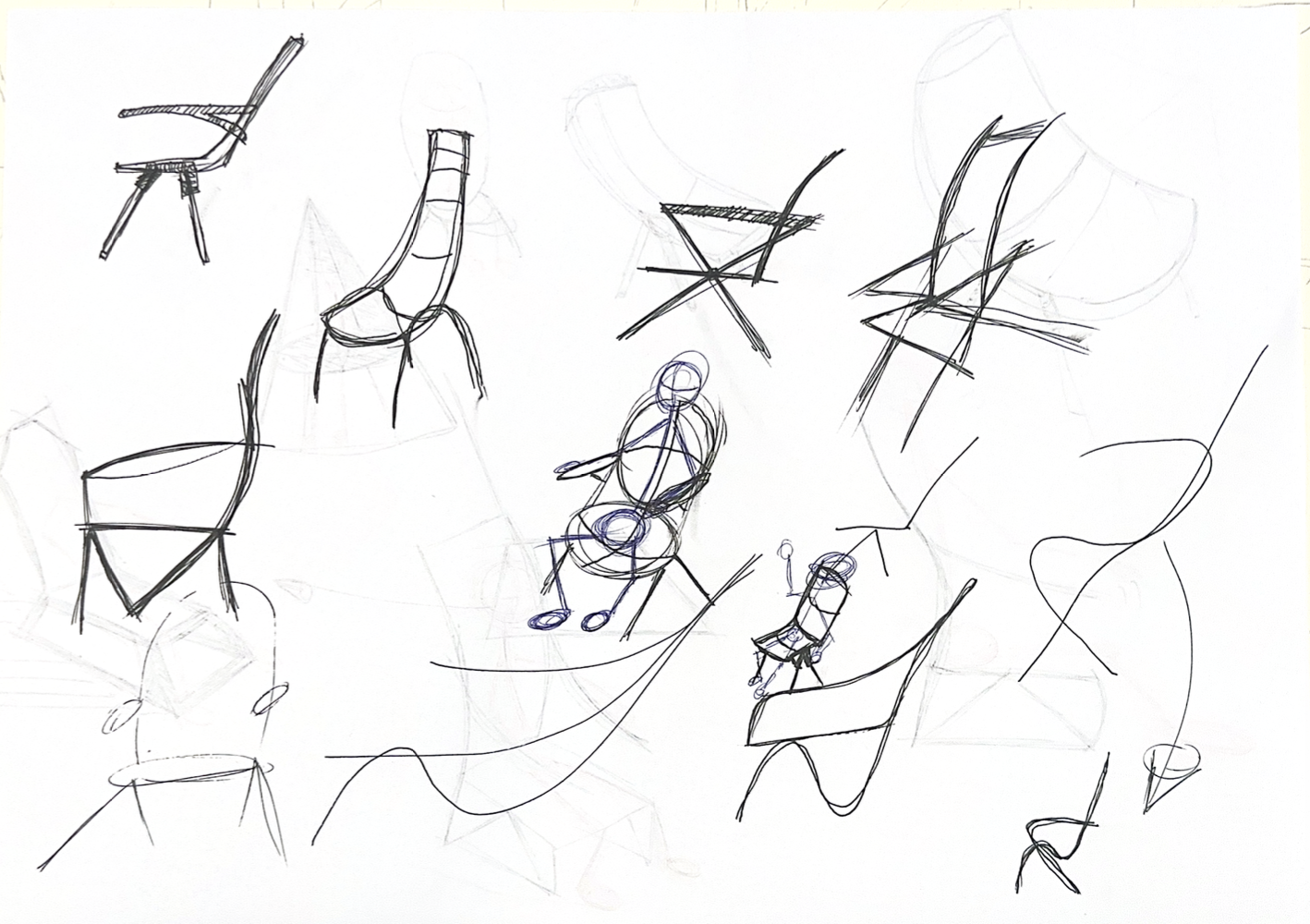
When first starting to sketch, I struggled with getting stuck into perspective 3/4 views. To get my ideas down more easily, I used orthographic side views instead, as they still conveyed the chair form well. A chair's main shape is largely defined by its side profile, so it was a perfect place to start. I then used those orthographic sketches to develop rough 3/4 views of the same chair. Having that 2D profile helped me understand my ideas visually on paper, making it easier to think through volume and scale.
Developing Ideas
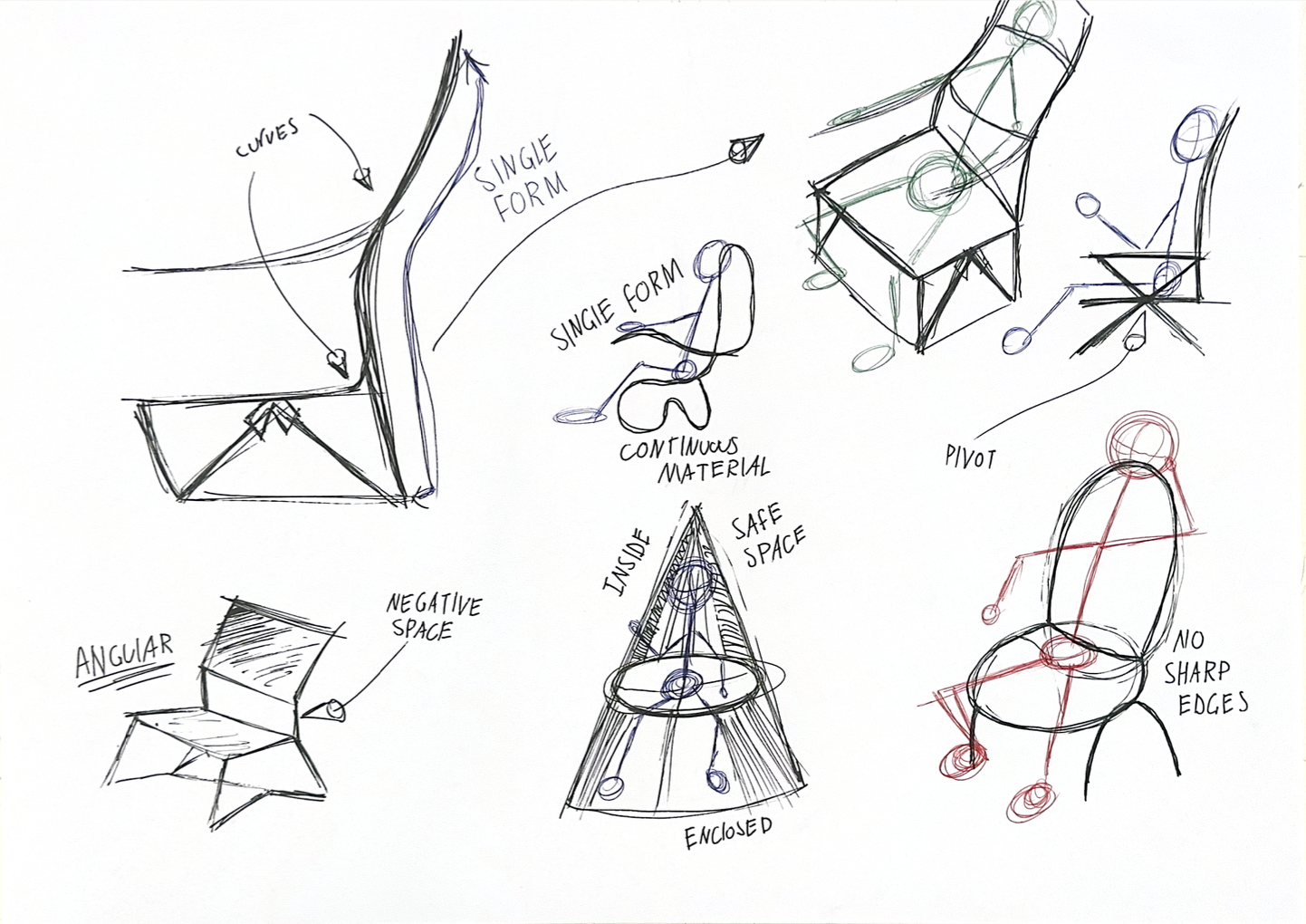
Once I had a few ideas on a page and knew I liked some of them, I introduced a new sheet of paper and redrew the stronger ideas larger and with more detail. I included human scale and annotations to view my ideas more clearly than just a rough sketchy image.
 Rough Ideas 2
 Developing Ideas
Chair Ideation
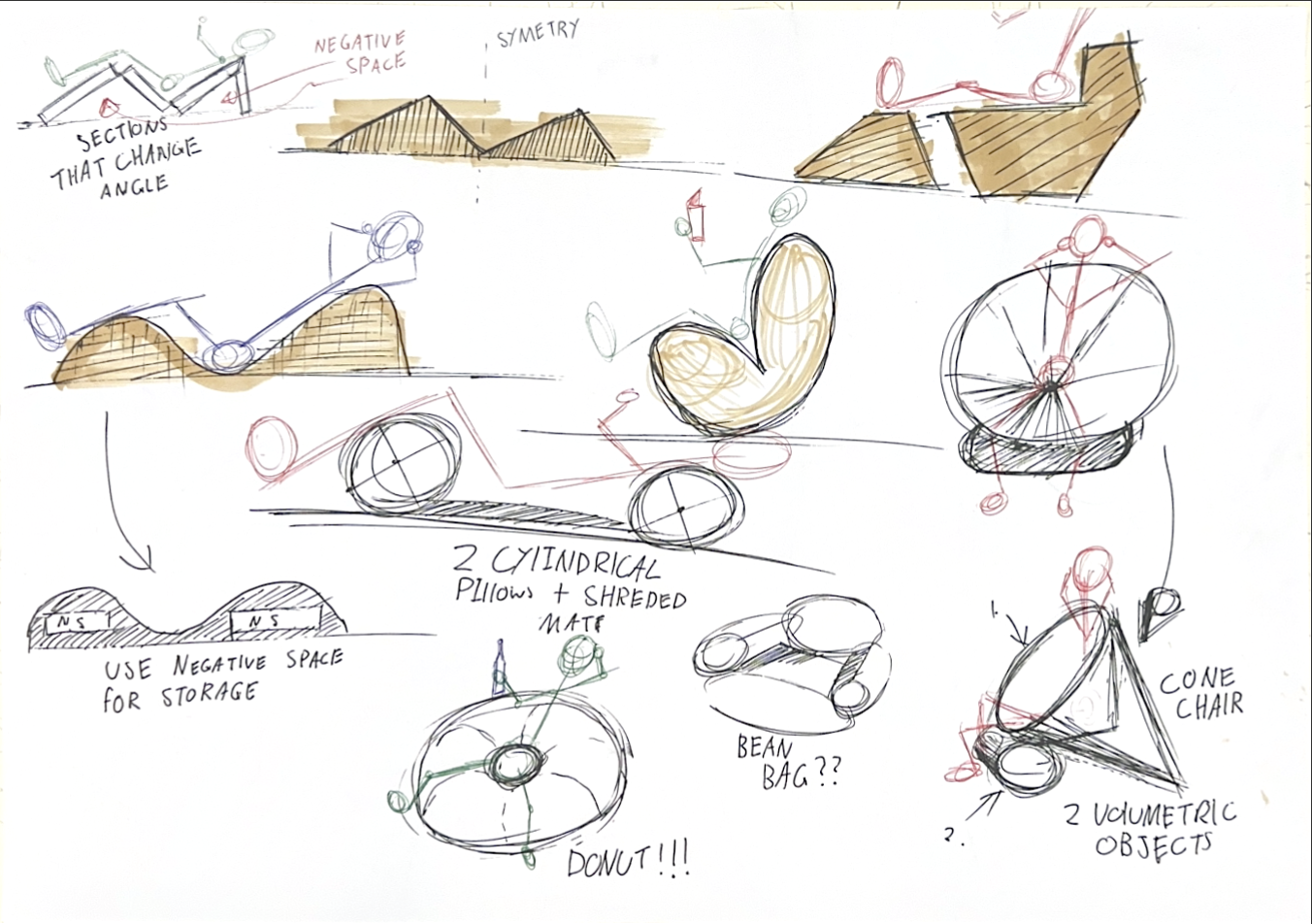
Rapid ideation sketches for the cardboard chair, drawing on material research, ergonomic analysis and typology study to generate a broad range of design directions.
 Ideation Page 1
Sketching Process
During this process I found major improvement in my sketching abilities. I felt more confident the longer I drew, finding the right connection between my ideas and the paper. The use of stick figures was extremely helpful, not only to me, but to others viewing the ideas, as they could also visually understand my thought process.
Colour & Contrast
It was also helpful to add Copic marker colour to some of the ideas to further show how they might look made from cardboard. This added more visual interest to the sketches and allowed them to be distinguished from one another. Additionally, using different colours for the human models allowed the person to be contrasted from the chair, so they did not feel lost within the sketch or cause the human lines to blend with the chair lines.
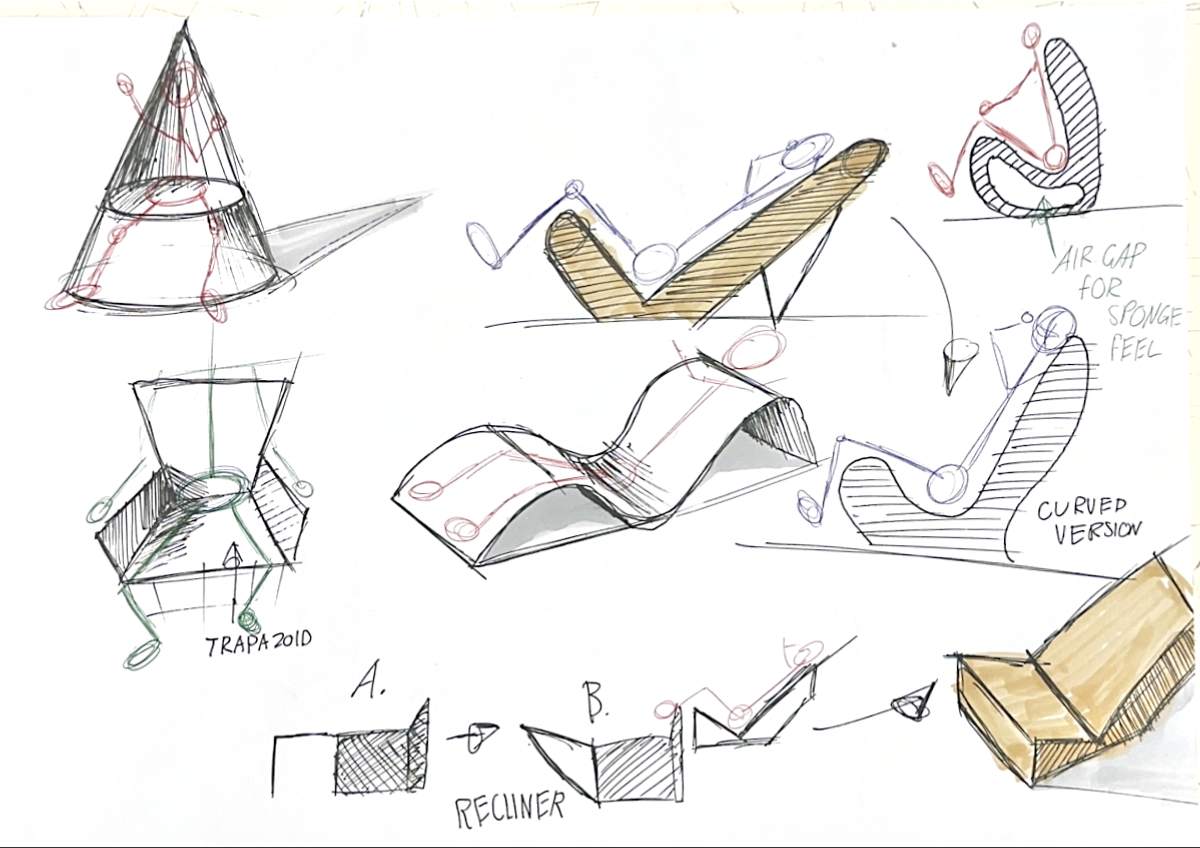 Ideation Page 2
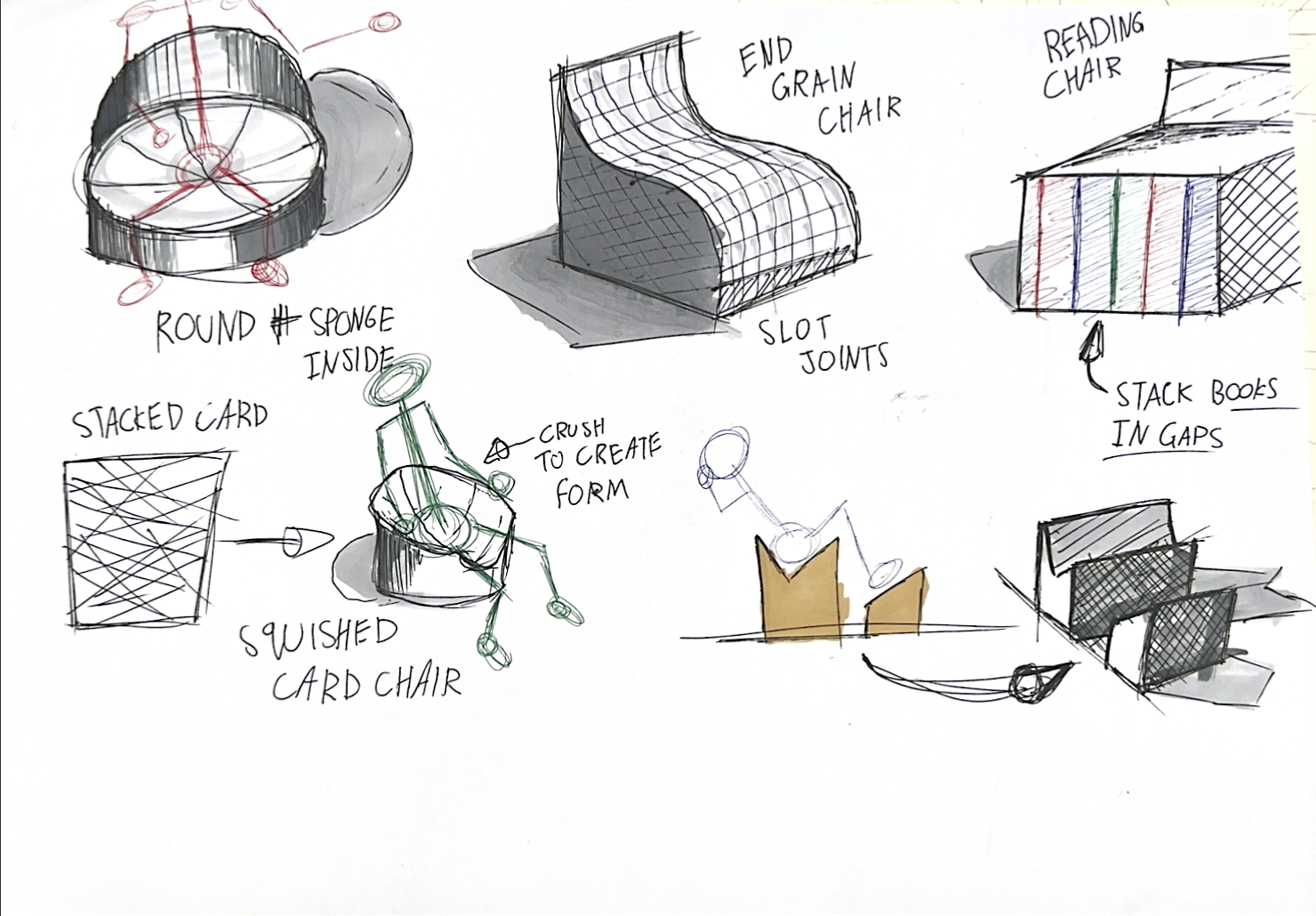 Ideation Page 3
Concept Pages
[INSERT DESCRIPTION HERE]